Showing posts with label Italy. Show all posts

Monday, May 6, 2019

Video: 70 Years of NATO. The Florence Declaration Calls for NATO-Exit


Global Research, May 06, 2019

PandoraTV 3 May 2019


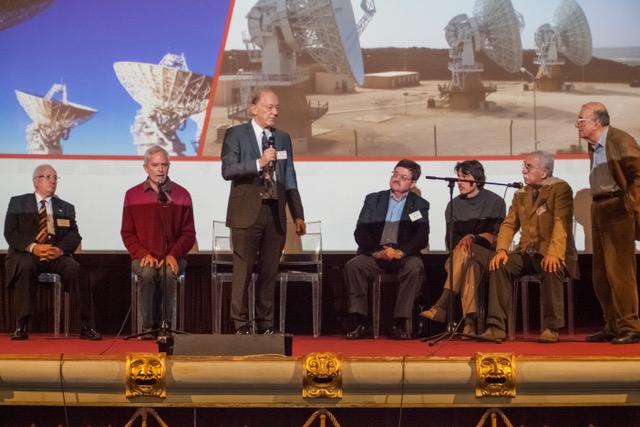
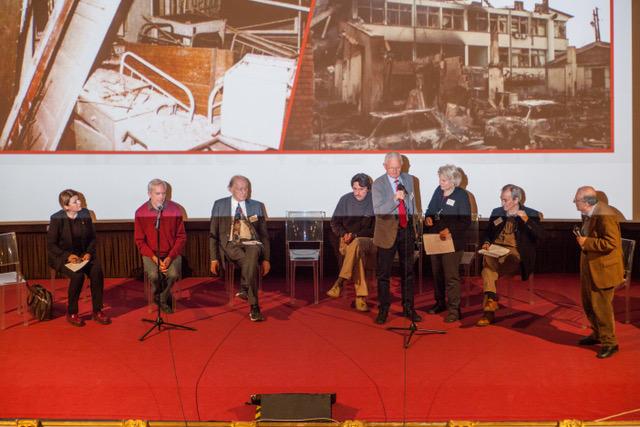
The following video (Part I) brings to the forefront the analysis and debate on NATO’s 70th anniversary in Florence, Italy (april 7, 2019).
The Florence Declaration adopted by more than 600 participants calls for NATO-Exit: the withdrawal of NATO member states from the North Atlantic Treaty Organization, 
The object of the Florence Declaration is NATO-EXIT. The Dismantling of NATO and the closure of US military bases. 
NATO is not an Alliance. It is an organisation under the command of the Pentagon, and its objective is the military control of Western and Eastern Europe.
US bases in the member countries of NATO serve to occupy these countries, by maintaining a permanent military presence which enables Washington to influence and control their policies and prevent genuine democratic choices.
NATO is a war machine which works for the interests of the United States, with the complicity of the major European power groups, staining itself with crimes against humanity.
Italian and English


*
Note to readers: please click the share buttons below. Forward this article to your email lists. Crosspost on your blog site, internet forums. etc.


https://www.globalresearch.ca/70-years-nato/5676673

JUST NEWS published this article following the Creative Commons rule. If you don't want your article to appear in this blog email me and I will remove it asap.

Thursday, April 11, 2019

The Florence Declaration: The Creation of a “NATO-Exit” International Front


Global Research, April 11, 2019

The risk of a vast war which, with the use of nuclear weapons, could mean the end of Humanity, is real and growing, even though it is not noticed by the general public, which is maintained in the ignorance of this imminent danger.
A strong engagement to find a way out of the war system is of vital importance. This raises the question of the affiliation of Italy and other European countries with NATO.
NATO is not an Alliance. It is an organisation under the command of the Pentagon, and its objective is the military control of Western and Eastern Europe.
US bases in the member countries of NATO serve to occupy these countries, by maintaining a permanent military presence which enables Washington to influence and control their policies and prevent genuine democratic choices.
NATO is a war machine which works for the interests of the United States, with the complicity of the major European power groups, staining itself with crimes against humanity.
Manlio Dinucci from Italy
Michel Chossudovsky from Canada
The war of aggression waged by NATO in 1999 against Yugoslavia paved the way for the globalization of military interventions, with wars against Afghanistan, Libya, Syria and other countries, in complete violation of international law.
These wars are financed by the member countries, whose military budgets are increasing continually to the detriment of social expenditure, in order to support colossal military programmes like that of the US nuclear programme which costs 1,200 billion dollars.
In violation of the Non-Proliferation Treaty, the USA is deploying nuclear weapons in five non-nuclear NATO States, under the false pretext of the ”Russian menace”. By doing so, they are risking the security of Europe.
Zivadin Jovanovic from Serbia
To exit the war system which is causing more and more damage and exposing us to increasing dangers, we must leave NATO, affirming our rights as sovereign and neutral States.
In this way, it becomes possible to contribute to the dismantling of NATO and all other military alliances, to the reconfiguration of the structures of the whole European region, to the formation of a multipolar world where the aspirations of the People for liberty and social justice may be realised.
We propose the creation of a NATO EXIT International Front in all NATO member countries , by building an organisational network at a basic level strong enough to support the very difficult struggle we must face in order to attain this objective, which is vital for our future.
*
Note to readers: please click the share buttons below. Forward this article to your email lists. Crosspost on your blog site, internet forums. etc.
Manlio Dinucci is a Research Associate of the Centre for Research on Globalization.


https://www.globalresearch.ca/declaration-florence-international-front-nato-exit/5674125


JUST NEWS published this article following the Creative Commons rule. If you don't want your article to appear in this blog email me and I will remove it asap.

Tuesday, April 2, 2019

China’s President Xi Jinping in Italy: It’s the Maritime Ports!


Global Research, April 02, 2019

To the concern of Germany, France, Holland and other EU countries, Italy’s coalition has just signed a Memorandum of Understanding with China to join China’s Belt Road Initiative, the so-called New Economic Silk Road. Italy is the only industrial G7 country so far to opt in to the BRI. The China deal has the potential to change the geopolitics of not only the EU but also most of the world.  It’s about who controls which major maritime ports of world commerce.
While much attention has focused on the role of high-speed rail infrastructure as the backbone of the ambitious China BRI project, little attention has been so far given to what may be a far more strategic geopolitical development in China’s BRI, namely China’s ability to own or control the most vital ports of Asia, of Africa, major parts of Latin America and now,evidently, of the European Union.
During Xi Jinping’s Italy talks, the two sides signed a non-binding Memorandum of Understanding (MOU) for various business deals between Italian and Chinese state companies in agriculture, finance and energy. The actual deals signed totaled $2.8 billion for 29 projects, with possible expansion up to $20 billion, hardly yet a game-changer for economically distressed Italy.
The heart of the MOU for China, however, is the potential for Chinese investment in Italian ports, notably Genoa, possibly Palermo and Trieste where China’s Communications and Construction Company will be given access to the port of Trieste on the Adriatic Sea to enable links to central and eastern Europe.
The Chinese inroads with the Italian government are strongly opposed by not only Washington, but also by Brussels, especially Germany and France. They argue that the bilateral Italy-China BRI agreements for port and infrastructure development run counter to the larger established EU transportation strategies. The more honest reasons perhaps are growing alarm in Hamburg and Rotterdam and Antwerp, Belgium over potential loss of shipping trade to southern Europe. By expanding its port presence from Greece into Italy, China potentially gains a huge trade infrastructure advantage in EU trade terms via southern Europe.
The Greek Precedent
Apparently, the Italian government is hoping for a repeat of what they see with Chinese investment in a run-down Greek port,as a way to revitalize the Italian economy as a transit hub between Europe and Asia.
In 2016 the China state-owned China Ocean Shipping Company (COSCO) bought Piraeus port in Greece as part of the Maritime Silk Road plan. COSCO is the world’s fourth largest container shipping company and the second largest port operator. The deal included construction of a new dock, with new cranes installed, increasing the annual container traffic dramatically. Since 2009 when China first came, the cargo volume of the Piraeus container terminal has increased fivefold, and general commercial activity tripled.
Ports of the World
With little fanfare, over the past several years China has invested in or bought key ports around the world as part of its vast Belt, Road Initiative infrastructure strategy. According to China’s Ministry of Transport, Chinese companies have participated in the construction and operation of a total of 42 ports in 34 countries under its Belt and Road initiative.
In the EU,China has made substantial investment aside from Piraeus. In 2018 COSCO became a major investor in Belgium’s second largest container port at Bruges (Zeebrugge). The Belgian port of Zeebrugge is expected to become a new hub of the Belt and Road initiative. Zeebrugge, or the port of Bruges, is the second largest container port in Belgium after Antwerp, and the sixth in the Channel-North Sea region (2016). It is also the leading European port for car transportation.
On January 22, 2018, China’s COSCO officially secured the concession of Zeebrugge’s container port, the first terminal in Northwest Europe in which Cosco Shipping Ports holds a controlling stake. They are also engaged in Antwerp and Rotterdam.
Extending the map of China’s Maritime Silk Road, in the five years since the BRI was officially announced, China has invested in port projects across Africa from Tanzania to South Africa to Morocco. The keystone is their investment in Egypt’s Suez Canal, the strategic passage from China via the Indian Ocean and Red Sea into the Mediterranean on to the markets of the European Union. China is the major investor in the joint China-Egypt Suez Economic and Trade Cooperation Zone.
In China, the country today has seven of the world’s largest container ports, all of them modern, with state-of-art automation. The Port of Shanghai is the world’s biggest by volume, far larger than Rotterdam, Antwerp or Hamburg in the EU. While high-speed rail networks catch the imagination around land links between China and Eurasia in the BRI, sea shipping is far the most vital for China trade. Some 90% of all world trade today is by ship.
EU Angst?
The latest China interest in investing in ports in Italy should be seen in this light. Recently the EU and large states such as Germany and France have expressed alarm over the extent of Chinese infrastructure and corporate investment in the EU. On March 12 the EU Commission issued a position paper titled, “EU-China – A strategic outlook.” Among other points it struck a new, alarmist note in the economic relations of the EU’s second most important trading partner after he USA. The report stated, “China is, simultaneously, in different policy areas, a cooperation partner…an economic competitor in the pursuit of technological leadership, and a systemic rival promoting alternative models of governance.”
It marks the first time at that level that the EU has labeled China a “systemic rival.” The new EU China paper recommends among other things that the WTO be reformed to force China to eliminate state industry subsidies; develop an EU Industrial Policy that would allow EU firms to better compete with the huge China state enterprises. The EU paper echoes a January paper by the German industry federation, BDI, which, declared that China, using its central state industrial policies, was now a “systemic competitor.”
The German government is planning to introduce new laws that could block foreign takeover of any German company considered strategic. That’s a radical departure from their postwar market policies, and came after a Chinese state company bought the advanced German automated machine tool company Kuka. Kuka is one of the world’s leading suppliers of robotics as well plant manufacturing and system technology and a pioneer in Industrie 4.0 on which China bases much of its Made in China 2025 strategy to become world leader in ten advanced industrial sectors.
German and French economics ministers have joined to call on the EU to allow member states to approve industrial mergers that Brussels presently bans on narrow EU grounds. When China joined the WTO in 2001, German industry exported quality German cars and machine tools in return for Chinese mass textiles and cheap consumer goods. Those days are gone. Today China carmaker Geely owns Sweden’s Volvo, and is a major shareholder in the Mercedes Daimler group where they are finalizing purchase of the Mercedes Smart car division. China’s state ChemChina chemicals giant recently bought Swiss Syngenta, a major force in GMO patented seeds and agriculture chemicals. The list is long.
The growing EU concern with the emergence of China as an industrial rival with Chinese companies, making and exporting goods that EU companies long held the advantage, is only beginning to be discussed openly. It has in part to do with the realization by large parts of EU Industry that the much-touted “Made in China:2025” national industrial strategy is not just about upgrading China to a modern state-of-the-art industrial producing nation, but, by between 2030 and 2040, into the world leader, the economic El Supremo.
There is a growing alarm across the EU that that rise would be at the expense of leading EU industrial groups.  It takes little to imagine within several years that the container ships from China’s mega ports will be shipping Chinese-owned and manufactured cars or machine tools to compete in the EU market using their ultra-modernized ports in Greece and Italy.
When Xi Jinping went from Italy to meet France’s embattled President Macron on March 26, Macron took an unusual step and invited German Chancellor Merkel and EU Commission President Juncker to join to form appearance of a united bloc to the overwhelming economic challenge of the Chinese.
Two days before the Xi visit to Paris Macron told the press that, “the period of European naivety” regarding the EU’s relations with China is over. He cryptically added, “The relationship between the EU and China must not be first and foremost a trading one, but a geopolitical and strategic relationship.”
France and Germany to date have resisted any formal EU cooperation with China’s Belt, Road Initiative and have pressured individual EU countries such as Italy not to make bilateral deals with China. But the reality is that the EU is largely dysfunctional in terms of modern industrial strategy. In this sense the Xi Jinping Italy BRI agreements can well be a trigger for a global geopolitical tectonic shift. How that will look in the future is impossible to say. At present, it appears Beijing is holding the stronger cards.
*
Note to readers: please click the share buttons below. Forward this article to your email lists. Crosspost on your blog site, internet forums. etc.
F. William Engdahl is strategic risk consultant and lecturer, he holds a degree in politics from Princeton University and is a best-selling author on oil and geopolitics, exclusively for the online magazine “New Eastern Outlook” where this article was originally published. He is a frequent contributor to Global Research.
Featured image is from NEO

seeds_2.jpg

Seeds of Destruction: Hidden Agenda of Genetic Manipulation

Author Name: F. William Engdahl
ISBN Number: 978-0-937147-2-2
Year: 2007
Pages: 341 pages with complete index
List Price: $25.95

Special Price: $18.00


This skilfully researched book focuses on how a small socio-political American elite seeks to establish control over the very basis of human survival: the provision of our daily bread. “Control the food and you control the people.”
This is no ordinary book about the perils of GMO. Engdahl takes the reader inside the corridors of power, into the backrooms of the science labs, behind closed doors in the corporate boardrooms.
The author cogently reveals a diabolical world of profit-driven political intrigue, government corruption and coercion, where genetic manipulation and the patenting of life forms are used to gain worldwide control over food production. If the book often reads as a crime story, that should come as no surprise. For that is what it is.


https://www.globalresearch.ca/xi-jinping-italy-its-ports/5673397


JUST NEWS published this article following the Creative Commons rule. If you don't want your article to appear in this blog email me and I will remove it asap.

Saturday, March 30, 2019

China-Italy Cooperation and the “Devil’s Alternative”


Global Research, March 30, 2019

Marx XXI 25 March 2019

The complex Sino-American trade negotiation is going through a period that is not turbulent but is nevertheless marked by objective difficulties: too much distance separates the American warnings from the concessions that China is willing to make without penalizing its development and it becomes too difficult to contain the impact of the war on 5G (which is part of the negotiation but which also concerns other strategic aspects) in the United States and Europe. However difficult it may be, it cannot be excluded that an agreement is still possible. But there are many economists who observe how the “great deal” would put Europe in check, tightened in an alliance between the two superpowers and unable to carve out a role in international trade.
It is with this premise that the signing of a memorandum of understanding between Italy and China during the State visit of the Chinese President must be judged, which will officially begin on 22 p.v. with the meeting with the President of the Republic Sergio Mattarella. Because faced with the real risk of failure of the negotiations there is an absolute need to build a sovereign foreign policy for the country and capable of protecting its economic and geo-strategic interests.
To do this, a framework agreement with China and the emerging economies is essential, otherwise the country will be subject to blackmail, which would further aggravate the already precarious condition of the Italian economy and the eurozone itself. In fact, faced with the possibility of Italy joining the club of the countries of the Belt and Road Initiative (BIS), the United States has set up a very strong strategy of blackmail. If Italy were to sign, it would expose itself, according to American sources, to commercial, economic and military cooperation and intelligence retaliation; if, on the other hand, it were to decide to withdraw the agreement with Beijing, the alternative would be, in any case, to maintain a framework of subordination with Washington, to be paid at a high price. The example of the war on the 5G is, from this point of view, paradigmatic: Italy is pushed to renounce the technological modernization through the Chinese infrastructures available today on the market, waiting for an American technology which does not yet exist and which, in the future, will certainly be more expensive than the Chinese one. The choice is clear: if you make the agreement you expose yourself to retaliation, if you delete the agreement you get nothing in return, if not the maintenance of the status quo based on unfair agreements and a relationship of absolute subordination. Tertium non datur.
For these reasons, the government’s decision to confirm the signing of the Memorandum certainly does not represent an exit strategy from the framework of Atlantic and NATO conditioning, but it does outline at least one way to create the conditions to attract the Chinese surplus in terms of direct investment in the short term and lay the foundations for a foreign policy that breaks with the blackmail that Washington and, for various reasons, Brussels are trying to impose on our country.
It is interesting to note that the “party against the memorandum”, which has enjoyed great media coverage and the political backing of the League in government and the Pd and Forza Italia for the opposition, has used almost exclusively the argument of the need not to cooperate with Beijing because it promotes a hegemonic project. They then argued that in any case we could not sign the memorandum, without first asking permission from our “landlord”, the U.S. (on the subject of hegemony …).
Who knows how they will comment today, after reading the letter that Xi Jinping has entrusted to the pages of the Corriere della Sera and which provides the key to interpretation of Chinese diplomacy and regions for his strong investment in our country. It is a text written from a very clear perspective: Italy and China are not called to agree on a series of economic and trade dossiers. Not only that, at least. The two countries are called upon to respect their long thousand-year history which, in the words of Xi Jinping, places them as “emblems of eastern and western civilization”, given that “they have written some of the most important and significant chapters in the history of human civilization”. Their relationship, even the Silk Road itself, is therefore not born today, but has its roots in the times of the Roman Empire, to then live special occasions that have made the history of relations between the two countries. Marco Polo arrived at the court of the Khan before Christopher Columbus discovered the Americas, Matteo Ricci became mandarin to win the trust of the Ming and Prospero Intorcetta translated Confucius into Latin and opened an important window of knowledge on Eastern philosophy throughout the West. It is to this story that the Chinese president refers when he speaks of the relations between his country and Italy, drawing heavily on the great history of Italy and citing, among others, Dante, Virgil, Moravia and Italian synology.
But the key passage of the Chinese President’s speech is probably the following: “Faced with the evolutions and challenges of the contemporary world, the two countries appeal to their precious and long experience and together imagine the interesting scenarios capable of creating a new model of international relations based on mutual respect, equality and justice and cooperation of mutual benefit, building a shared future of humanity”. The story of the “new world order with Chinese characteristics”, as it has been contemptuously defined by the opponents of the Italo-Chinese agreement, or the rhetoric of Beijing’s hegemony is shattered on the rocks of the strategic pact that China offers Italy, of building a new model of international relations that definitively closes the unilateralism in vogue after the collapse of the USSR and lays the foundations for cooperation between equals among the nations of the world. Equality, justice and cooperation are universal values that have their roots in the ideals of the French Revolution and that we certainly cannot ignore.
At the same time, those who continue to see China as their main enemy and write it in their own strategic documents (US and EU) and with the peace of their Italian representatives who would like the country to adopt an aggressive policy towards Beijing or in a privileged inter-European relationship (which does not exist, given the divergent interests that exist in the eurozone), or in a framework of Euro-Atlantic cooperation whose objective is the rupture of the Russian-Chinese axis and the co-optation of Moscow in a new iron curtain hostile to Beijing.
Italian politics has a crossroads before it: either it accepts the “devil’s alternative” and binds itself to the decline of this strategic vision, or it overturns the table and affirms the need for a policy based on cooperation and equal dignity among nations. The signing of the Memorandum is the first step to take the second road, but we are still at the initial skirmishes of an arm wrestling that will mark the near future.


https://www.globalresearch.ca/china-italy-cooperation-and-the-devils-alternative/5673135

JUST NEWS published this article following the Creative Commons rule. If you don't want your article to appear in this blog email me and I will remove it asap.

Wednesday, March 6, 2019

Video: Italian Special Forces at Camp Darby. Restructuring of US Military Complex in Northern Italy


Global Research, March 06, 2019


The news is not yet official, but is already being discussed – as from October, the Italian flag will be flying over Camp Darby. Are the United States about to close down the largest arsenal they have in the world outside of their homeland, and return to Italy the approximately 1,000 hectares of territory that they occupy between Pisa and Livorno?
Not at all. They are not in the process of closing down, but restructuring the base in order to be able to store even more weapons, and to increase the liaisons with the port of Livorno and Pisa airport.
In the restructuration, a small portion of the recreation area remained unused – 34 hectares, hardly more than 3 % of the total surface of the Camp. This is what the US Army Europe has decided to give back to Italy, more specifically to the Italian Minister for Defense, in order to use it more productively. So an agreement was drawn up planning for the transfer to this area of the Comando delle Forze Speciali dell’Esercito (COMFOSE) which is presently housed in the Caserne Gamerra in Pisa, headquarters of the Centre for Parachute Training. These are the Forces which are used more and more frequently for secret operations – they infiltrate foreign territory by night, note the targets to be hit, eliminate them with sudden actions by parachuting from planes or jumping from helicopters, then disappear without leaving a trace other than the dead and the destruction.
Italy, which had used these forces especially in Afghanistan, took a decisive step in their potentialisation when, in 2014, it made the COMFOSE operational – it now counts four regiments under a unified command – the 9th assault regiment Col. Moschin and the 185th Folgore regiment for the acquisition of targets, the 28th communications regiment Pavie and the 4th Rangers Parachute regiment.
During the inauguration ceremony in 2014, it was announced that the COMFOSE would maintain a “constant liaison with the US Army Special Operations Command”, the most important US command for special operations, composed of approximately 30,000 specialists employed particularly in the Middle East.
At Camp Darby – as was specified last year by Colonel Erik Berdy, commander of the US Army Italy – joint training operations were already under way with US and Italian soldiers. The transfer of COMFOSE to an area of Camp Darby, which legally belongs to Italy, will enable the complete integration of Italian and US special forces, and their use in secret operations under US command. All of this under cover of military secrecy.
It is therefore difficult not to think about the history of secret operations at Camp Darby – the investigations of judges Casson and Mastelloni revealed that since the 1960’s, Camp Darby has served as a base for the putchist network created by the CIA and by the SIFAR (Intelligence Service of the Italian Armed Forces) in the context of the secret Gladio plan. The USA/NATO bases – wrote Ferdinando Imposimato, honorary President of the Supreme Court of Cassation – supplied the explosives for the massacres of Piazza Fontana, Capaci and Via d’Amelio. In these bases “extreme right-wing terrorists, NATO officers, mafiosi, Italian politicians and Freemasons gathered together  on the eve of the attacks”.
And yet no-one, either in Parliament or the local collectives, worries about the implications of the transfer of Italian special forces, which, inside Camp Darby, will be under US command.
The municipalities of Pisa and Livorno, which passed respectively from Pd to the Lega and M5S, have continued to promote, with the region of Tuscany, “the integration of the US military base of Camp Darby with the surrounding community”.
A few days ago, it was decided to integrate the Web sites of the local administrations with those of Camp Darby. The Camp Darby network is expanding increasingly across the territory.
Source: PandoraTV
*
Note to readers: please click the share buttons below. Forward this article to your email lists. Crosspost on your blog site, internet forums. etc.
This article was originally published on Il Manifesto. Translated by Pete Kimberley.
Manlio Dinucci is a Research Associate of the Centre for Research on Globalization.


https://www.globalresearch.ca/italian-special-forces-camp-darby/5670514


JUST NEWS published this article following the Creative Commons rule. If you don't want your article to appear in this blog email me and I will remove it asap.