Prospects and Perspectives
Global Research, June 14, 2019
Global Research 24 November 2017
This article was originally published by GR in November 2017.
For almost 2 decades, the US pursued a list of ‘enemy countries’ to confront, attack, weaken and overthrow.
This imperial quest to overthrow ‘enemy countries’ operated at various levels of intensity, depending on two considerations: the level of priority and the degree of vulnerability for a ‘regime change’ operation.
The criteria for determining an ‘enemy country’ and its place on the list of priority targets in the US quest for greater global dominance, as well as its vulnerability to a ‘successfully’ regime change will be the focus of this essay.
We will conclude by discussing the realistic perspectives of future imperial options.
Prioritizing US Adversaries
Imperial strategists consider military, economic and political criteria in identifying high priority adversaries.
The following are
high on the US ‘enemy list’:
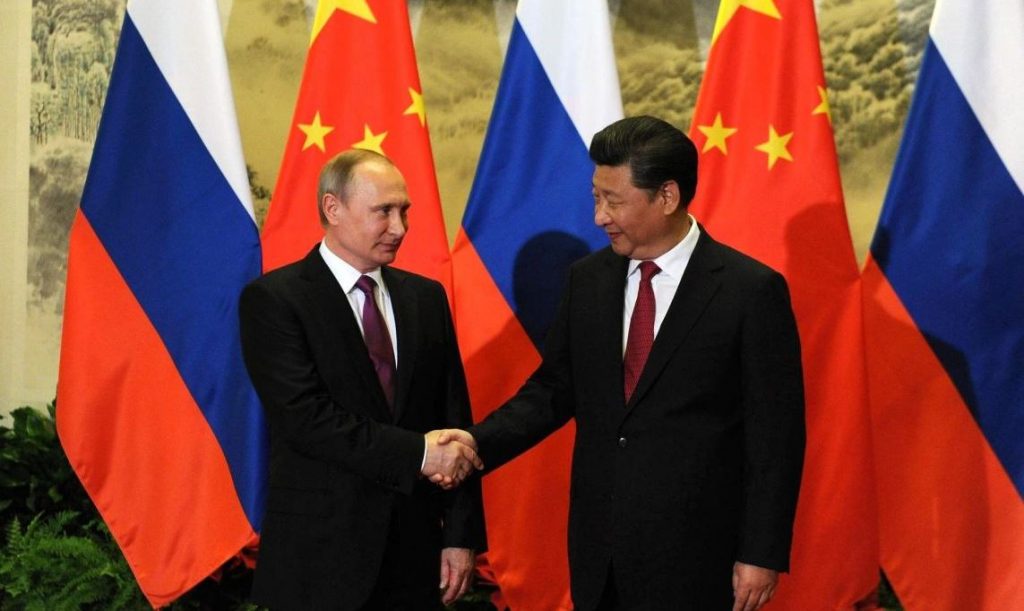
1) Russia, because of its military power, is a nuclear counterweight to US global domination. It has a huge, well-equipped armed force with a European, Asian and Middle East presence. Its global oil and gas resources shield it from US economic blackmail and its growing geo-political alliances limit US expansion.
2) China, because of its global economic power and the growing scope of its trade, investment and technological networks. China’s growing defensive military capability, particularly with regard to protecting its interests in the South China Sea serve to counter US domination in Asia.
3)
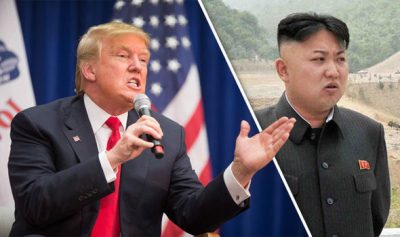
North Korea, because of its nuclear and ballistic missile capability, its fierce independent foreign policies and its strategic geo-political location, is seen as a threat to the US military bases in Asia and Washington’s regional allies and proxies.
4) Venezuela, because of its oil resources and socio-political policies, challenge the US centered neo-liberal model in Latin America.

5)
Iran, because of its oil resources, political independence and geo-political alliances in the Middle East, challenge US, Israeli and Saudi Arabia domination of the region and present an independent alternative.
6) Syria, because of its strategic position in the Middle East, its secular nationalist ruling party and its alliances with Iran, Palestine, Iraq and Russia, is a counterweight to US-Israeli plans to balkanize the Middle East into warring ethno-tribal states.
US Middle-level Adversaries :
1) Cuba, because of its independent foreign policies and its alternative socio-economic system stands in contrast to the US-centered neo-liberal regimes in the Caribbean, Central and South America.
2) Lebanon, because of its strategic location on the Mediterranean and the coalition government’s power sharing arrangement with the political party, Hezbollah, which is increasingly influential in Lebanese civil society in part because of its militia’s proven capacity to protect Lebanese national sovereignty by expelling the invading Israeli army and helping to defeat the ISIS/al Queda mercenaries in neighboring Syria.
3) Yemen, because of its independent, nationalist Houthi-led movement opposed to the Saudi-imposed puppet government as well as its relations with Iran.
Low Level Adversaries
1) Bolivia, because of its independent foreign policy, support for the Chavista government in Venezuela and advocacy of a mixed economy; mining wealth and defense of indigenous people’s territorial claims.
2) Nicaragua, because of its independent foreign policy and criticism of US aggression toward Cuba and Venezuela.
US hostility to high priority adversaries is expressed through economic sanctions military encirclement, provocations and intense propaganda wars toward North Korea, Russia, Venezuela, Iran and Syria.
Because of China’s powerful global market linkages, the US has applied few sanctions. Instead, the US relies on military encirclement, separatist provocations and intense hostile propaganda when dealing with China.
Priority Adversaries, Low Vulnerability and Unreal Expectations
With the exception of Venezuela, Washington’s ‘high priority targets’ have limited strategic vulnerabilities. Venezuela is the most vulnerable because of its high dependence on oil revenues with its major refineries located in the US, and its high levels of indebtedness, verging on default. In addition, there are the domestic opposition groups, all acting as US clients and Caracas’ growing isolation within Latin America due to orchestrated hostility by important US clients, Argentina, Brazil, Colombia and Mexico.
Iran is far less vulnerable: It is a strong strategic regional military power linked to neighboring countries and similar religious-nationalist movements. Despite its dependence on oil exports, Iran has developed alternative markets, like China, free from US blackmail and is relatively safe from US or EU initiated creditor attacks.
North Korea, despite the crippling economic sanctions imposed on its regime and civilian population, has ‘the bomb’ as a deterrent to a US military attack and has shown no reluctance to defend itself. Unlike Venezuela, neither Iran nor North Korea face significant internal attacks from US-funded or armed domestic opposition.
Russia has full military capacity – nuclear weapons, ICBM and a huge, well-trained armed force – to deter any direct US military threat. Moscow is politically vulnerable to US-backed propaganda, opposition political parties and Western-funded NGO’s. Russian oligarch-billionaires, linked to London and Wall Street, exercise some pressure against independent economic initiatives.
To a limited degree, US sanctions exploited Russia’s earlier dependence on Western markets, butsince the imposition of draconian sanctions by the Obama regime, Moscow has effectively counteredWashington’s offensive by diversifying its markets to Asia and strengthening domestic self-reliance in its agriculture, industry and high technology.
China has a world-class economy and is on course to become the world’s economic leader. Feeble threats to ‘sanction’ China have merely exposed Washington’s weakness rather intimidating Beijing. China has countered US military provocations and threats by expanding its economic market power, increasing its strategic military capacity and shedding dependence on the dollar.
Washington’s high priority targets are not vulnerable to frontal attack: They retain or are increasing their domestic cohesion and economic networks, while upgrading their military capacity to impose completely unacceptable costs on the US for any direct assault.
As a result, the US leaders are forced to rely on incremental, peripheral and proxy attacks with limited results against its high priority adversaries.
Washington will tighten sanctions on North Korea and Venezuela, with dubious prospects of success in the former and a possible pyrrhic victory in the case of Caracas. Iran and Russia can easily overcome proxy interventions. US allies, like Saudi Arabia and Israel, can badger, propagandize and rail the Persians, but their fears that an out-and-out war against Iran, could quickly destroy Riyadh and Tel Aviv forces them to work in tandem to induce the corrupt US political establishment to push for war over the objections of a war-weary US military and population. Saudi and Israelis can bomb and starve the populations of Yemen and Gaza, which lack any capacity to reply in kind, but Teheran is another matter.
The politicians and propagandists in Washington can blather about Russia’s interference in the US’s corrupt electoral theater and scuttle moves to improve diplomatic ties, but they cannot counter Russia’s growing influence in the Middle East and its expanding trade with Asia, especially China.
In summary, at the global level, the US ‘priority’ targets are unattainable and invulnerable. In the midst of the on-going inter-elite dogfight within the US, it may be too much to hope for the emergence of any rational policymakers in Washington who could rethink strategic priorities and calibrate policies of mutual accommodation to fit in with global realities.
Medium and Low Priorities, Vulnerabilities and Expectations
Washington can intervene and perhaps inflict severe damage on middle and low priority countries. However, there are several drawbacks to a full-scale attack.
Yemen, Cuba, Lebanon, Bolivia and Syria are not nations capable of shaping global political and economic alignments. The most the US can secure in these vulnerable countries are destructive regime changes with massive loss of life, infrastructure and millions of desperate refugees . . . but at great political cost, with prolonged instability and with severe economic losses.
Yemen
The US can push for a total Saudi Royal victory over the starving, cholera-stricken people of Yemen. But who benefits? Saudi Arabia is in the midst of a palace upheaval and has no ability to exercise hegemony, despite hundreds of billions of dollars of US/NATO arms, trainers and bases. Colonial occupations are costly and yield few, if any, economic benefits, especially from a poor, geographically isolated devastated nation like Yemen.
Cuba
Cuba has a powerful highly professional military backed by a million-member militia. They are capable of prolonged resistance and can count on international support. A US invasion of Cuba would require a prolonged occupation and heavy losses. Decades of economic sanctions haven’t worked and their re-imposition by Trump have not affected the key tourist growth sectors.

President Trump’s ‘
symbolic hostility’ does not cut any ice with the major US agro-business groups, which saw Cuba as a market. Over half of the so-called ‘overseas Cubans’ now oppose direct US intervention.
US-funded NGOs can provide some marginal propaganda points but they cannot reverse popular support for Cuba’s mixed ‘socialized’ economy, its excellent public education and health care and its independent foreign policy.
Lebanon
A joint US-Saudi economic blockade and Israeli bombs can destabilize Lebanon. However, a full-scale prolonged Israeli invasion will cost Jewish lives and foment domestic unrest. Hezbollah has missiles to counter Israeli bombs. The Saudi economic blockade will radicalize Lebanese nationalists, especially among the Shia and the Christian populations. The Washington’s ‘invasion’ of Libya, which did not lose a single US soldier, demonstrates that destructive invasions result in long-term, continent-wide chaos.
A US-Israeli-Saudi war would totally destroy Lebanon but it will destabilize the region and exacerbate conflicts in neighboring countries – Syria, Iran and possibly Iraq. And Europe will be flooded with millions more desperate refugees.
Syria
The US-Saudi proxy war in Syria suffered serious defeats and the loss of political assets. Russia gained influence, bases and allies. Syria retained its sovereignty and forged a battle-hardened national armed force. Washington can sanction Syria, grab some bases in a few phony ‘Kurdish enclaves’ but it will not advance beyond a stalemate and will be widely viewed as an occupying invader.
Syria is vulnerable and continues to be a middle-range target on the US enemy list but it offers few prospects of advancing US imperial power, beyond some limited ties with an unstable Kurd enclave, susceptible to internecine warfare, and risking major Turkish retaliation.
Bolivia and Nicaragua
Bolivia and Nicaragua are minor irritants on the US enemy list. US regional policymakers recognize that neither country exercises global or even regional power. Moreover, both regimes rejected radical politics in practice and co-exist with powerful and influential local oligarchs and international MNC’s linked to the US.
Their foreign policy critiques, which are mostly for domestic consumption, are neutralized by the near total US influence in the OAS and the major neo-liberal regimes in Latin America. It appears that the US will accommodate these marginalized rhetorical adversaries rather than risk provoking any revival of radical nationalist or socialist mass movements erupting in La Paz or Managua.
Conclusion
A brief examination of Washington’s ‘list of enemies’ reveals that the limited chances of success even among vulnerable targets. Clearly, in this evolving world power configuration, US money and markets will not alter the power equation.
US allies, like Saudi Arabia, spend enormous amounts of money attacking a devastated nation, but they destroy markets while losing wars. Powerful adversaries, like China, Russia and Iran, are not vulnerable and offer the Pentagon few prospects of military conquest in the foreseeable future.
Sanctions, or economic wars have failed to subdue adversaries in North Korea, Russia, Cuba and Iran. The ‘enemy list’ has cost the US prestige, money and markets – a very peculiar imperialist balance sheet. Russia now exceeds the US in wheat production and exports. Gone are the days when US agro-exports dominated world trade including trade with Moscow.
Enemy lists are easy to compose, but effective policies are difficult to implement against rivals with dynamic economies and powerful military preparedness.
The US would regain some of its credibility if it operated within the contexts of global realities and pursued a win-win agenda instead of remaining a consistent loser in a zero-sum game.
Rational leaders could negotiate reciprocal trade agreements with China, which would develop high tech, finance and agro-commercial ties with manufacturers and services. Rational leaders could develop joint Middle East economic and peace agreements, recognizing the reality of a Russian-Iranian-Lebanese Hezbollah and Syrian alliance.
As it stands, Washington’s ‘enemy list’ continues to be composed and imposed by its own irrational leaders, pro-Israel maniacs and Russophobes in the Democratic Party – with no acknowledgement of current realities.
For Americans, the list of domestic enemies is long and well known, what we lack is a civilian political leadership to replace these serial mis-leaders.
The original source of this article is Global Research
https://www.globalresearch.ca/americas-enemies-whos-on-the-list/5619763
JUST NEWS published this article following the Creative Commons rule. If you don't want your article to appear in this blog email me and I will remove it asap.


